
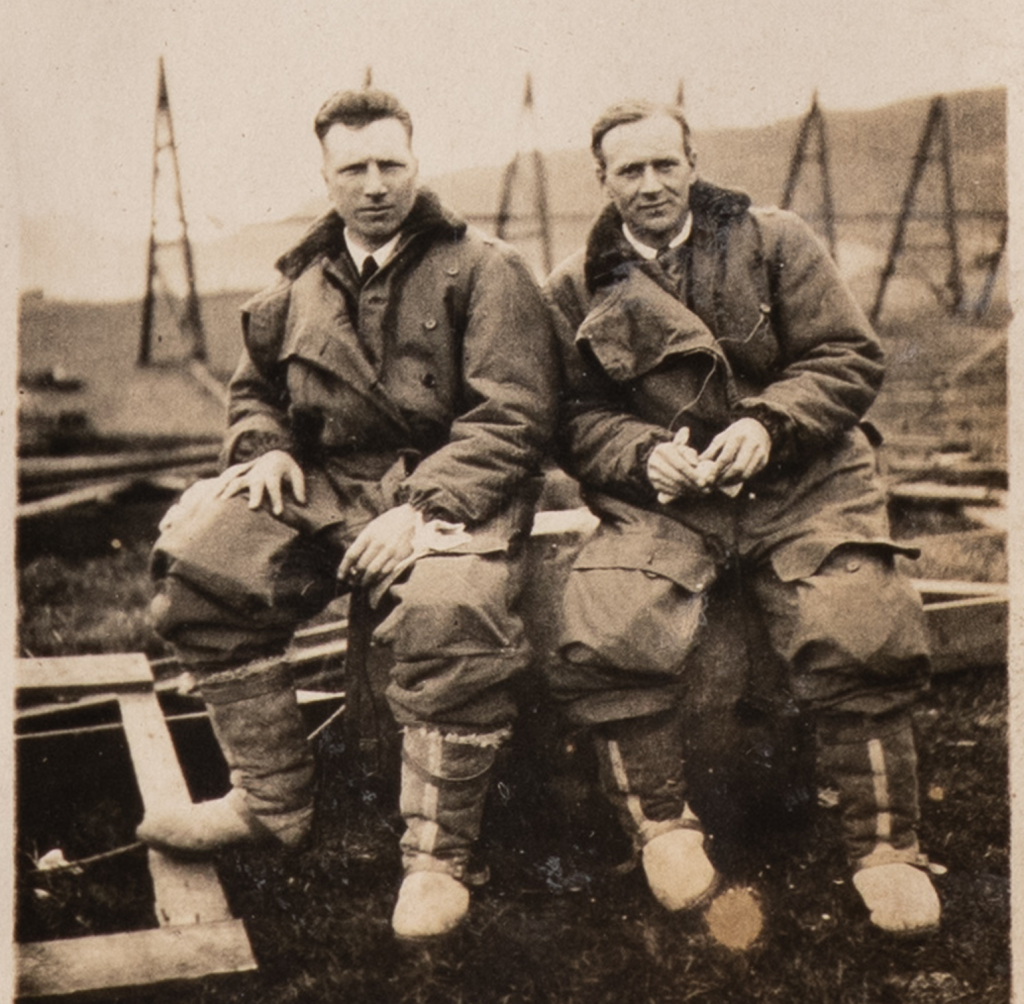
I have been involved in the story of Alcock and Brown for most of my adult life. I first encountered the two aviators having tea with my granny in the railway station in Galway. There was a photograph of the two men there on the wall and it piqued my interest. Twenty five years ago for the 75th anniversary of the flight, I built a radio controlled model aircraft of the Vickers Vimy that flew the Atlantic in 1919. That year I won first place in the national competition with the model.
Three years before the centenary of the flight, I had put in a proposal to RTE to make a documentary on the subject. Unfortunately, I was unsuccessful. With 8 months to run before the centenary date, I decided to raise the money myself and complete a documentary.
My first Port of call was to call Tony Alcock to see if I could convince him to take part?. He tested my knowledge and found that I was an expert on the subject and so agreed. I never properly understood his concerns until I arrived at John Alcocks grave, where I discovered Tony’s father was also buried there. This was indeed a family trust, and I did not take this trust lighty. The project really came together when Mark Rebholtz, a man who knows more about the flight than any other in the world, agreed to take part. I would have to fly him from the USA to London where we would visit the various sites. Most of the story is set in Manchester, and Tony’s nephew Ben lives nearby and agreed to be the focus of the documentary. Finally, a trip to Newfoundland was arranged where I discovered a treasure trove of previously unseen photographs. In Newfoundland, I was treated as a minor celebrity and interviewed by CBS for both radio and television.
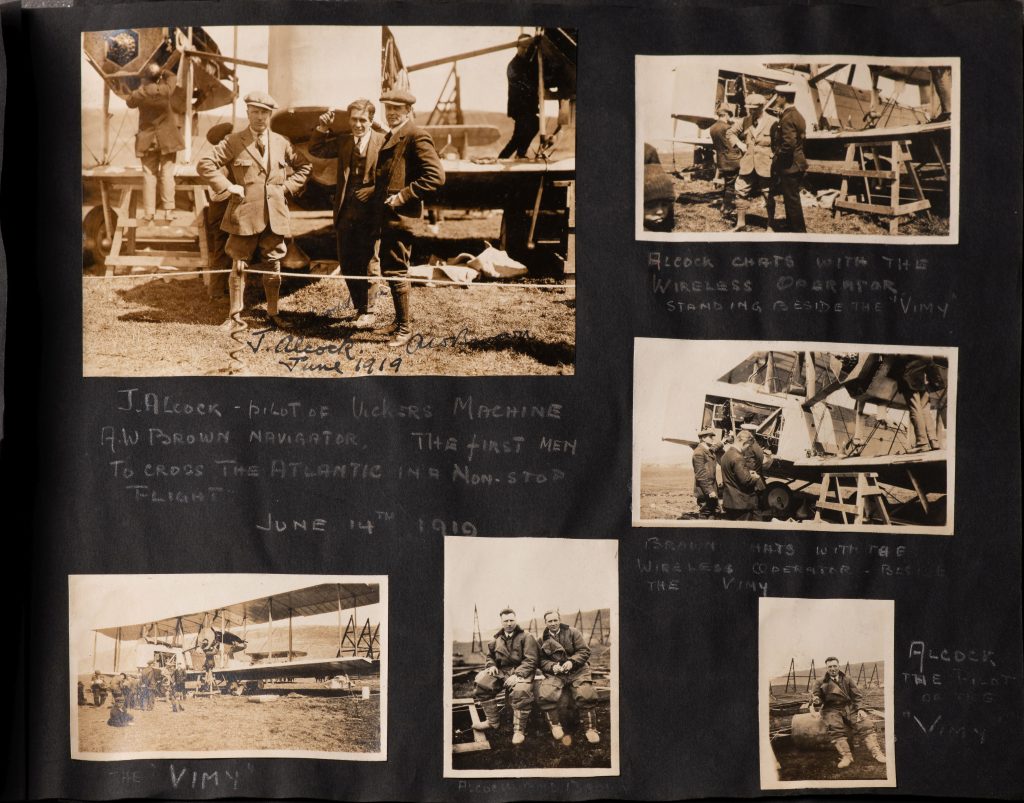
For Newfoundland and Clifden I had to operate as a one-man crew but in London and Manchester I employed a cameraman and sound man. Funds were very tight. I shot the documentary on a DSLR which provided the maximum flexibility and a small kit, easy to transport.
The premier for the film was arranged for Clifton which had a week of celebrations arranged for the Centenary. The premier was attended by many members of the Alcock family, and indeed many of my own family and friends. The final edit was only completed days before the event. Technical testing in the cinema was completed and the film was presented to a full house and standing ovation. In fact additional screenings were arranged for every day of that week and were all sold out, including a screening on Sunday morning which was not even advertised. The highlight of the event was when Tony Alcock stopped Terry, who was presenting the q&a, stood up and said on behalf of the Alcock family, that this film was an important piece of work and a legacy for John Alcock and his family.
The film has been presented in the IFA has part of Dublin history week, the British and Irish film festival in Luxembourg and again in September in Clifden as part of the arts festival. I was unable to attend the screening in Newfoundland but was invited to do the q&a remotely which was great fun.
What surprised me most about the film is that it is quite technical and deals with aviation, so I expected the geeks in the audience to enjoy it most, but in fact their partners seemed to find the film very emotional and have been my most ardent supporters.
The arrival of covid-19 has delayed the distribution of the film, but I’m hoping it will find its audience on TV or streaming shortly. It’s probable home is on BBC or one of the history channels. Here’s hoping !